Recording Studio
Millstone, NJ
Recording, Mixing, and Mastering for Students and Professional Musicians
A Recording Studio Built Around the Music—and the Musician
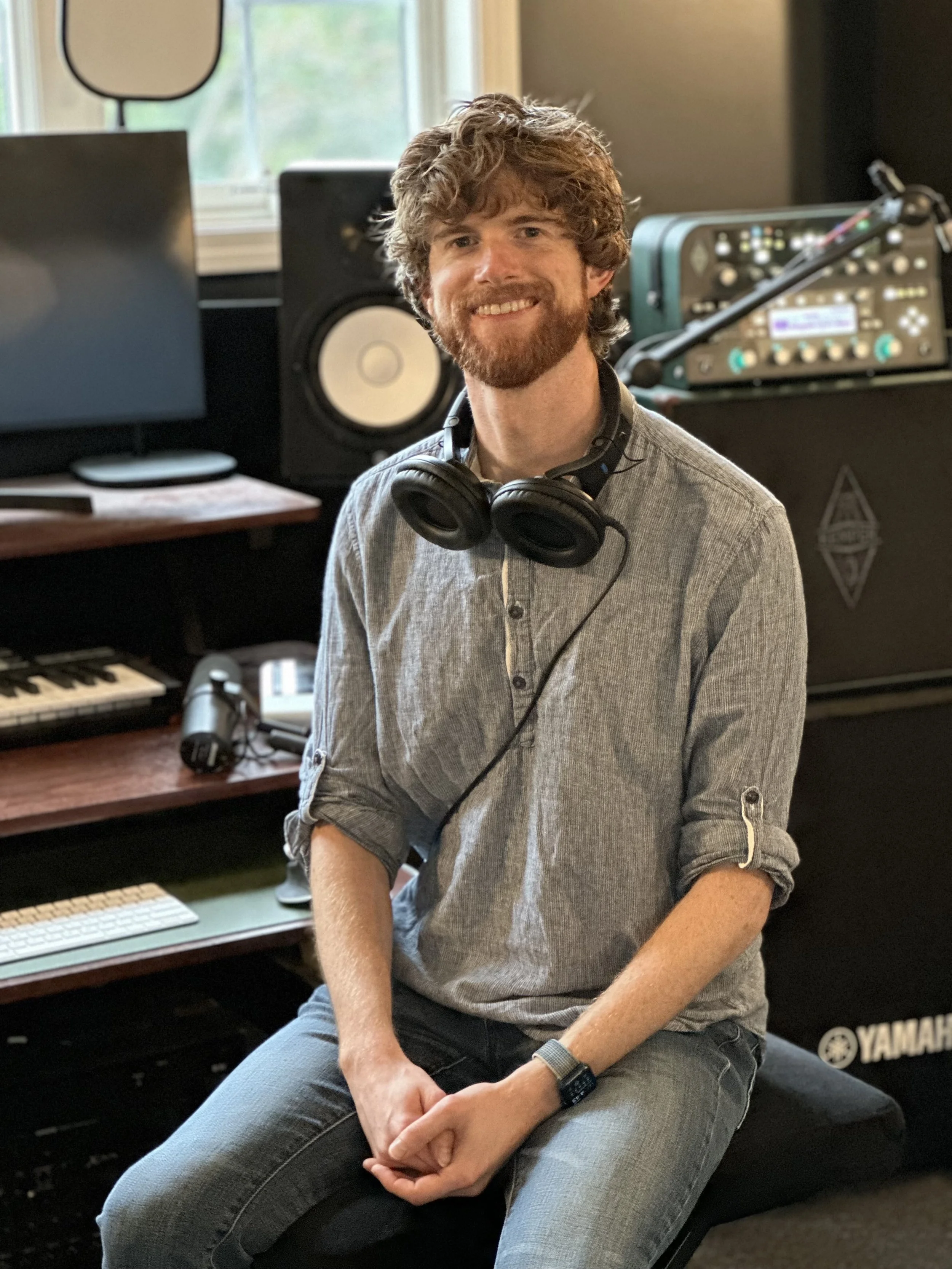
Our New Jersey recording studio offers professional recording, mixing, and mastering for singer-songwriters, bands, and students, led by recording engineer Dylan Lloyd in a relaxed, supportive environment. Dylan holds a Bachelor of Music Education in guitar and voice and has completed advanced coursework in recording and signal processing at The College of New Jersey.
Studio Equipment
-
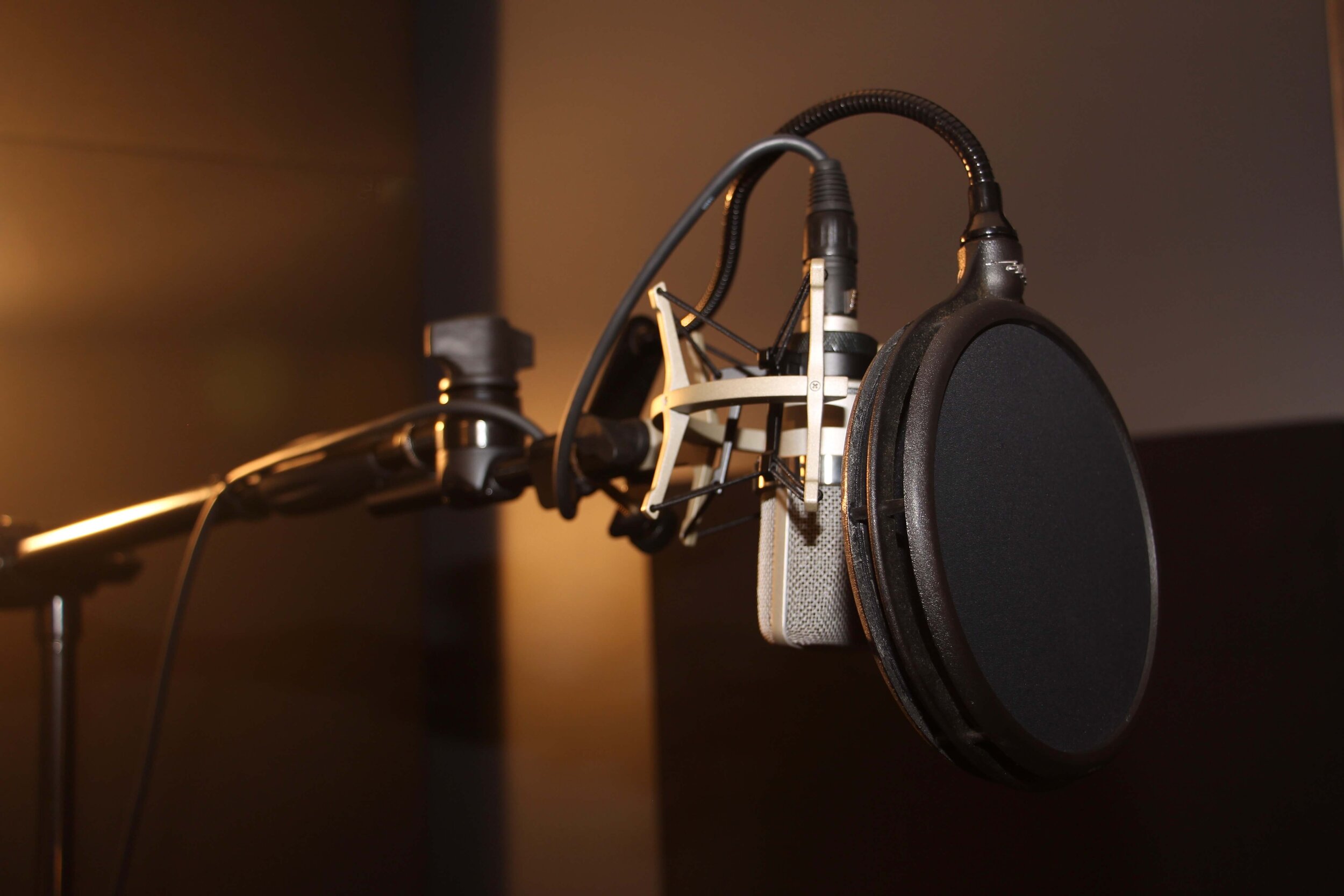
Warm Audio WA47
Neumann KM 184 (2)
Shure SM7B
Shure SM58 (4)
Shure SM57(3)
Shure Beta 52A
Audio Technica ATM25
Rode M5 (2) -
Apogee Symphony Desktop
Apogee Ensemble
Behringer XAIR18 -
Radial Pro DI
Radial Pro Reamp -
Kemper Profiler
-
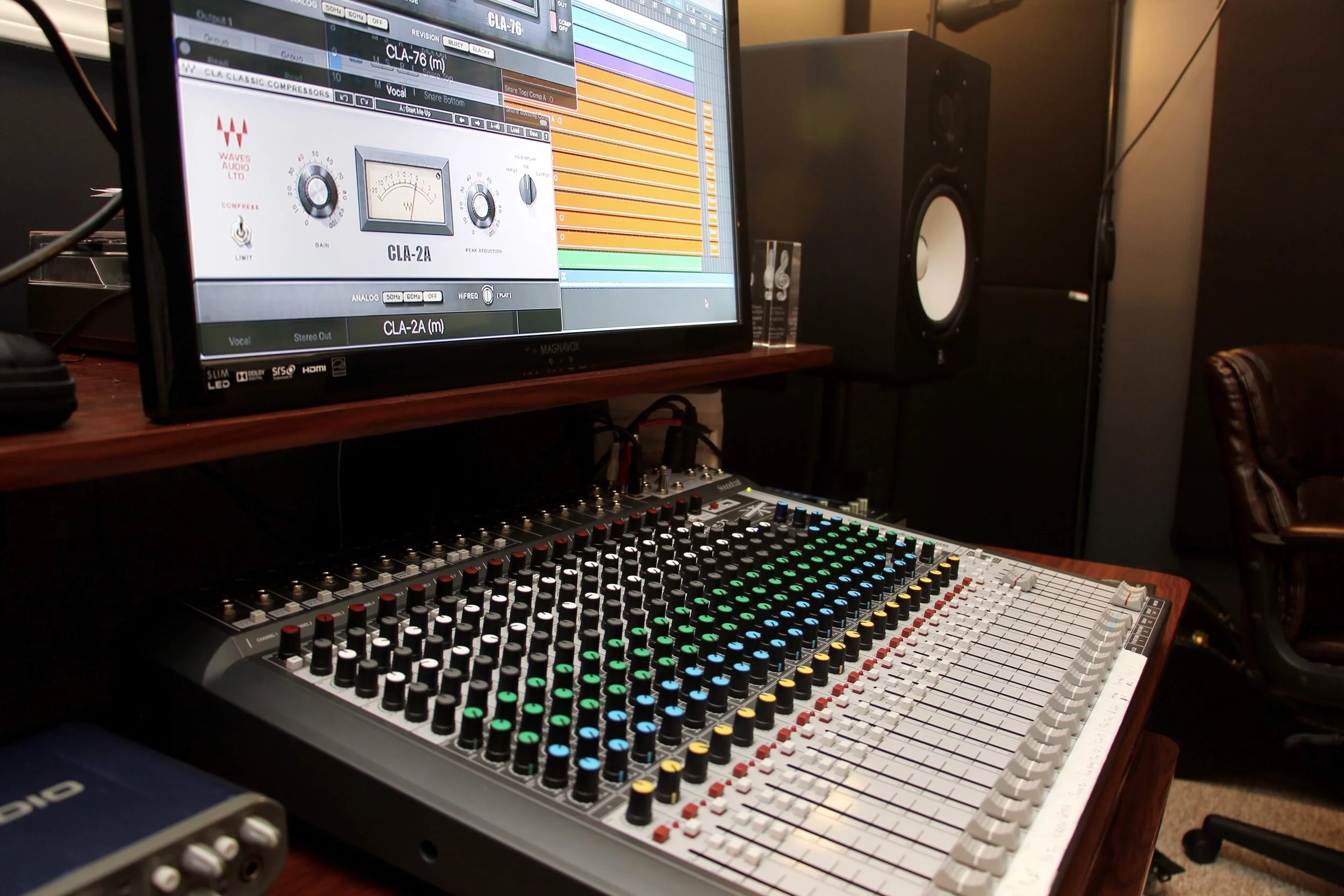
Logic Pro X
-
Many from the following companies:
Waves
Izotope
Universal Audio
Soundtoys
-
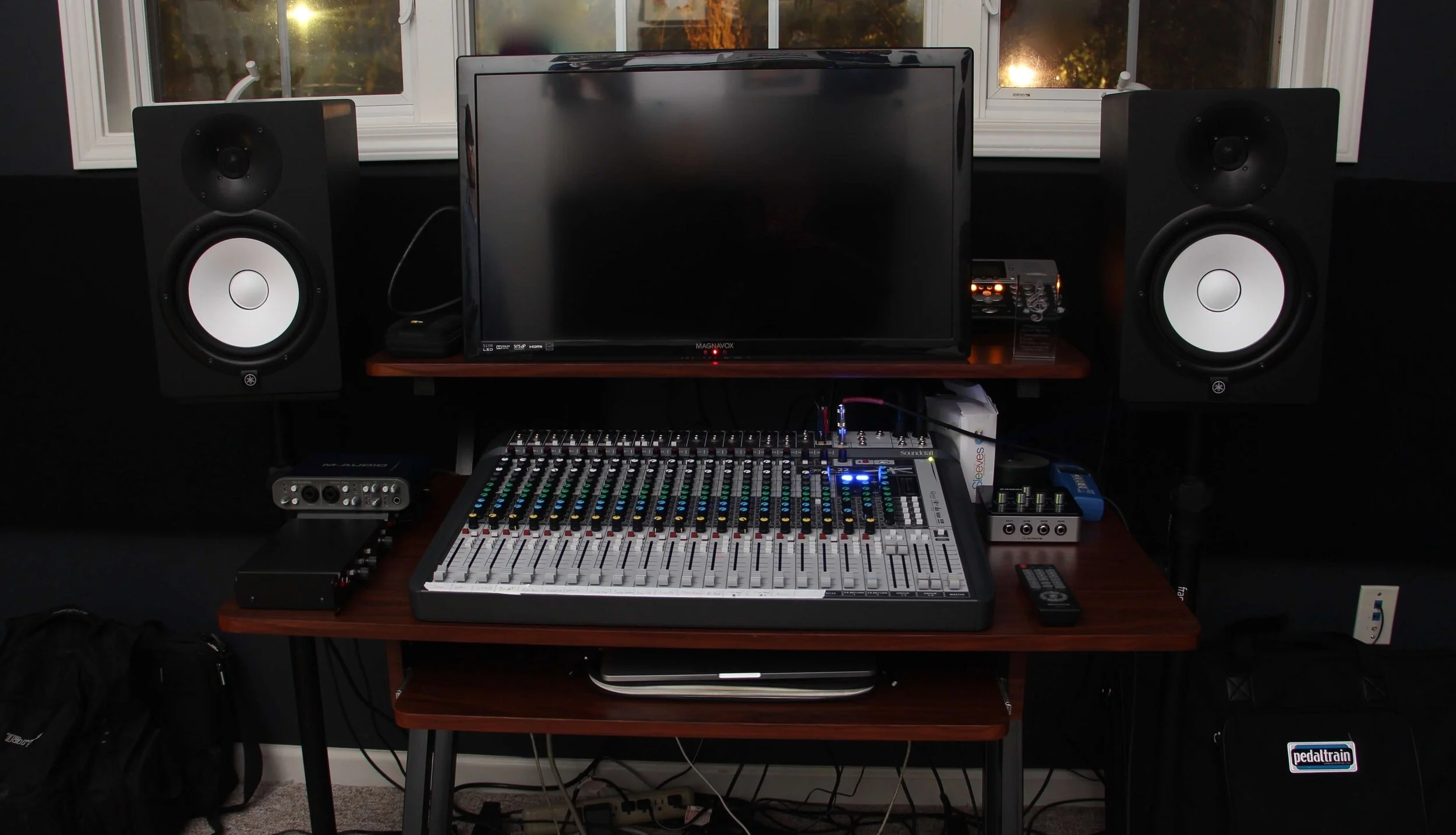
Yamaha HS8
-
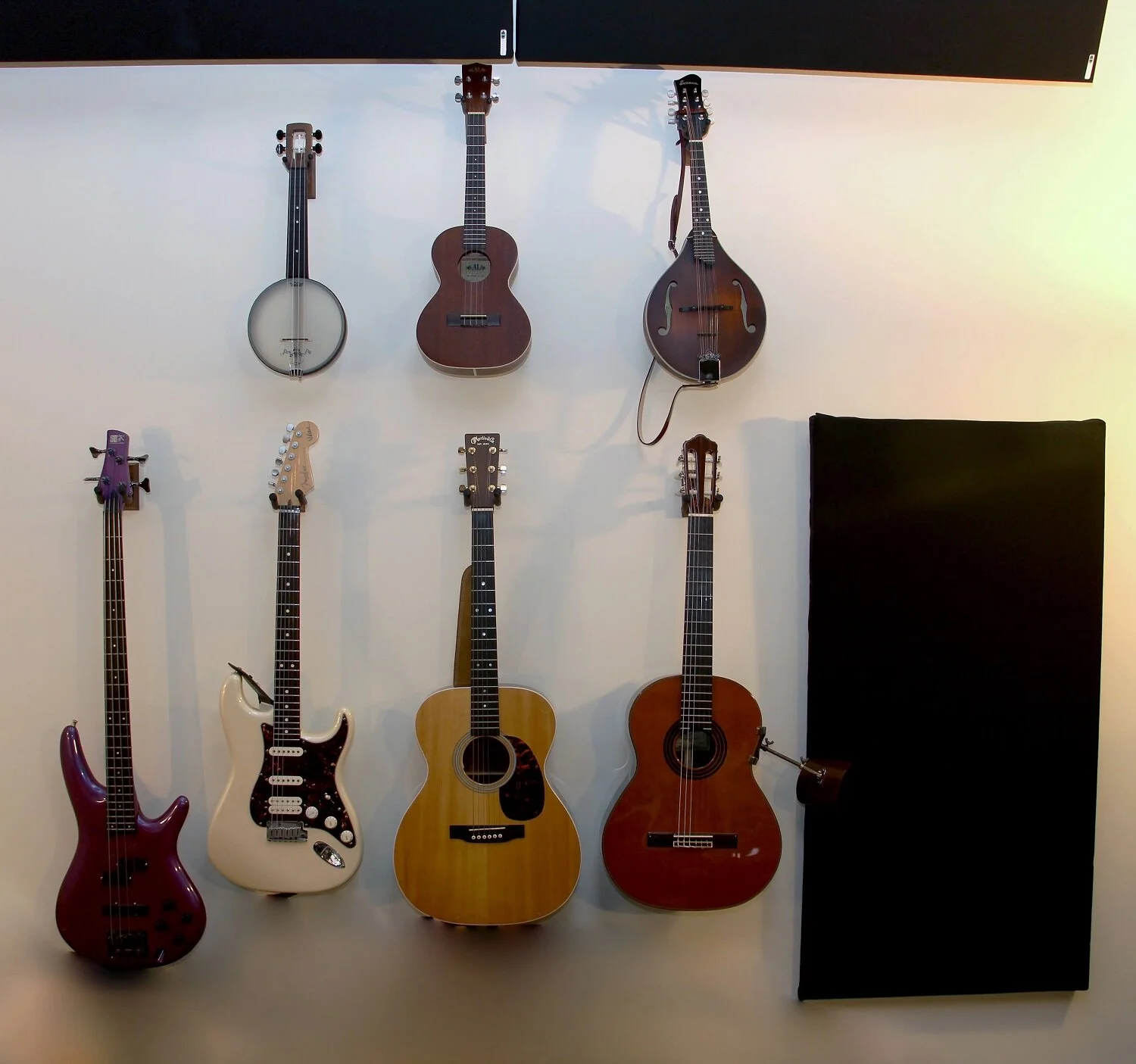
Fender American Professional Telecaster Electric Guitar
Gibson J45 Acoustic Guitar
Kenny Hill Player Series Classical Guitar -
Yamaha P-60 - 88 weighted keys with MIDI capabilities
Novation Launchkey 37 -
Yamaha CLP-895 GP PWH Grand
-
Alesis Nitro Max
How do college audition recordings work?
1.
Book 1 to 2 hours of studio time to record. Most students record multiple takes of up to 4 different songs.
2.
Choose your accompaniment: bring your own piano backing tracks, or hire a professional piano accompanist. We're happy to provide accompanist recommendations if needed.
3.
Audio is captured with a stereo pair of Neumann KM184 microphones; video is recorded with an iPhone Pro 17.
4.
Your finished recording is delivered via Google Drive for easy download and sharing with prospective colleges.
5.
Total billable time is typically 1–3 hours, depending on the length of your recording session.
How do singer/songwriter recordings work?
Option 1
Come in with pre-recorded instrumental tracks and record your vocals over top.
Option 2
Record your instrument(s) first, then layer your vocals on top in a separate pass.
Option 3
Record your instrument(s) and voice at the same time for a natural, live feel.
What options do I have after my song is recorded?
Raw Audio Files
You can have your raw audio files and be on your way.
Edited Uploadable Files
You can have your audio files edited, mixed, and mastered for a final, polished product that you can upload to streaming services.
What's the difference between recording, editing, mixing, and mastering?
Recording
This is recording your instrument(s) and/or voice with microphones.
Editing
If anything was out of tune or out of time, we can fix that with modern technology, but it takes additional time.
Mixing
This involves adjusting the volume of each instrument to get a good balance in sound, equalizing frequencies to make the sound more pleasing, adding compression to make the volume level more consistent, adding saturation to make the sound more exciting/pop out of the speakers more, and adding any effects such as reverb, delay, stereo spreading, etc to make for a more spacious, polished production.
Mastering
This involves making subtle enhancements to the mix and getting it up to the proper volume level for streaming services such as YouTube, Spotify, Apple Music, etc.
Interested in touring the studio or talking through your project?
Reach out to Dylan to schedule a tour and discuss your goals.